
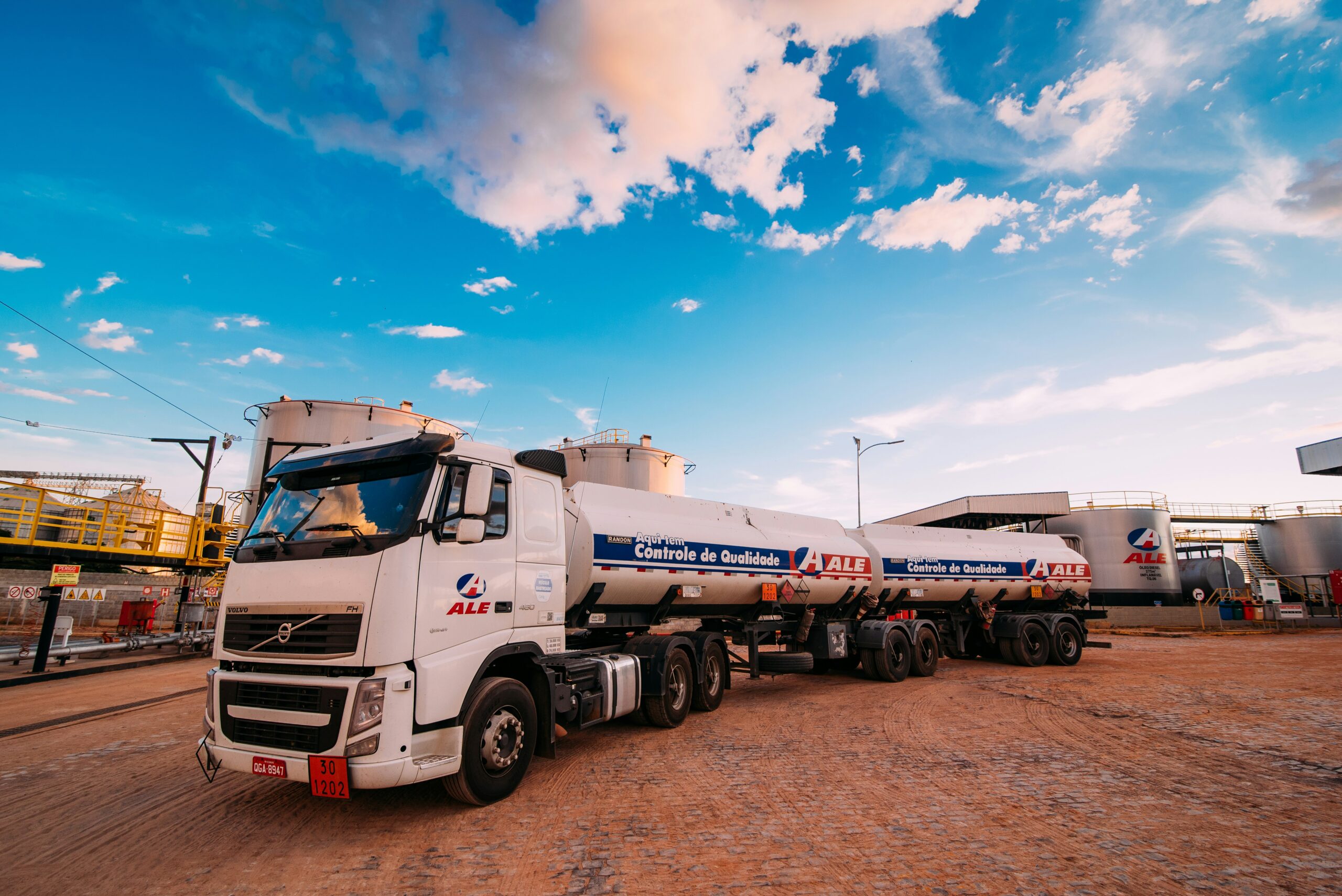
Semi truck fuel cost is the single biggest expense most owner-operators carry, and it’s also the number drivers estimate the loosest. “Around 6 miles per gallon” gets you in the ballpark, but the ballpark isn’t good enough when fuel is eating 25-35% of your gross revenue. If you don’t know your real cost per mile, you can’t tell a good rate from a bad one — you’re just guessing with a $150,000 truck.
This guide breaks down exactly how much fuel a semi-truck uses, what actually drives that number up or down, and how to turn it into a real cost-per-mile figure you can use to price loads with confidence.
The Average Semi-Truck Fuel Economy
Most fully-loaded semi-trucks average between 5.5 and 6.5 miles per gallon on the highway, though that range swings wider than most drivers expect. A well-maintained truck running at a steady 62-65 mph in good conditions can hit 7+ MPG. The same truck climbing mountain grades, running in stop-and-go traffic, or hauling a heavier load can drop to 4.5 MPG or lower.
That spread matters because a 2 MPG difference on a 2,500-mile week isn’t a rounding error — it’s real money. At $3.80/gallon, the difference between 5 MPG and 7 MPG on 2,500 miles is roughly $340 in fuel costs, in a single week.
What Actually Moves Your MPG
A handful of factors do most of the work in either direction:
Speed. Fuel economy drops sharply above 65 mph. Each additional 5 mph above that can cost you half a mile per gallon or more, purely from wind resistance.
Idling. A truck idling overnight can burn close to a gallon an hour doing nothing but running the AC or heat. Over a year, unnecessary idling adds up to hundreds of gallons — and hundreds of dollars — that never moved a load an inch.
Load weight and trailer type. A fully loaded 80,000 lb truck burns noticeably more fuel than the same truck running empty or lightly loaded. Trailer type matters too — a reefer running its unit burns extra diesel on top of the tractor’s own consumption.
Terrain and weather. Mountain routes, headwinds, and cold-weather idling all pull MPG down regardless of how well the truck is maintained.
Maintenance. Underinflated tires, dirty air filters, and worn injectors can each cost you a noticeable fraction of a mile per gallon. None of them show up as a big single expense — they just quietly tax every mile you drive.
How to Calculate Your Real Fuel Cost Per Mile
The formula itself is simple:
Fuel Cost Per Mile = Price Per Gallon ÷ Miles Per Gallon
At $3.80/gallon and 6 MPG, that’s $0.63 per mile in fuel alone. At 5 MPG, the same fuel price puts you at $0.76 per mile — a difference that changes whether a $2.00/mile load is actually profitable once every other expense is factored in.
The hard part isn’t the math — it’s getting an honest MPG number instead of the one you’d like to be true. The most reliable way is to track it directly: record your odometer and gallons at every fill-up for a few weeks and calculate your actual average, rather than relying on memory or your truck’s dash estimate. If you’re already using a fuel log, this number falls out of it automatically.
Once you have a real MPG figure, run it through the fuel cost calculator to get your per-mile and per-trip fuel costs instantly, without redoing the math by hand every time diesel prices move.
Fuel Cards: The Line Item Most Drivers Underuse
Fuel cost per mile isn’t just about MPG — it’s also about what you’re actually paying per gallon. A fuel card with real discounts at the truck stops you actually use can shave several cents off every gallon, which adds up fast at semi-truck fuel volumes. A truck running 100,000 miles a year at 6 MPG buys roughly 16,700 gallons annually — even a $0.05/gallon discount is over $800 a year, for doing nothing differently except which card you swipe.
If you haven’t compared fuel card options against your actual routes and fuel stops, it’s worth a look — the discount only helps if the network overlaps with where you actually fuel.
Turning Fuel Cost Into a Pricing Decision
Fuel is the largest single input into your overall cost per mile, but it’s not the only one — insurance, truck payment, maintenance, and permits all stack on top of it. Once you know your true fuel cost per mile, feed it into the cost per mile calculator along with your other fixed and variable costs to get your real break-even rate.
That number is what actually protects you at the negotiating table. A broker offering $2.10/mile sounds fine until you know your all-in cost is $2.05/mile — at that point, you’re not making a profit, you’re paying to drive. Knowing your fuel cost cold is what turns “that rate feels low” into “that rate is $0.15/mile below what I need.”
The Bottom Line
Semi-truck fuel economy isn’t a fixed number — it moves with speed, idling, load, terrain, and maintenance, and the gap between a lazy estimate and your real MPG can be worth hundreds of dollars a week. Track your actual fuel use, calculate your true cost per mile, and use that number every time you evaluate a load. The owner-operators who stay profitable aren’t the ones with the best trucks — they’re the ones who actually know their numbers.
Disclaimer: This article is for informational purposes only and does not constitute financial or business advice. Fuel prices, MPG, and operating costs vary by truck, route, and conditions. Always calculate your own numbers based on your specific equipment and expenses before making pricing decisions. TruckerCalc is not responsible for decisions made based on estimates in this article.