
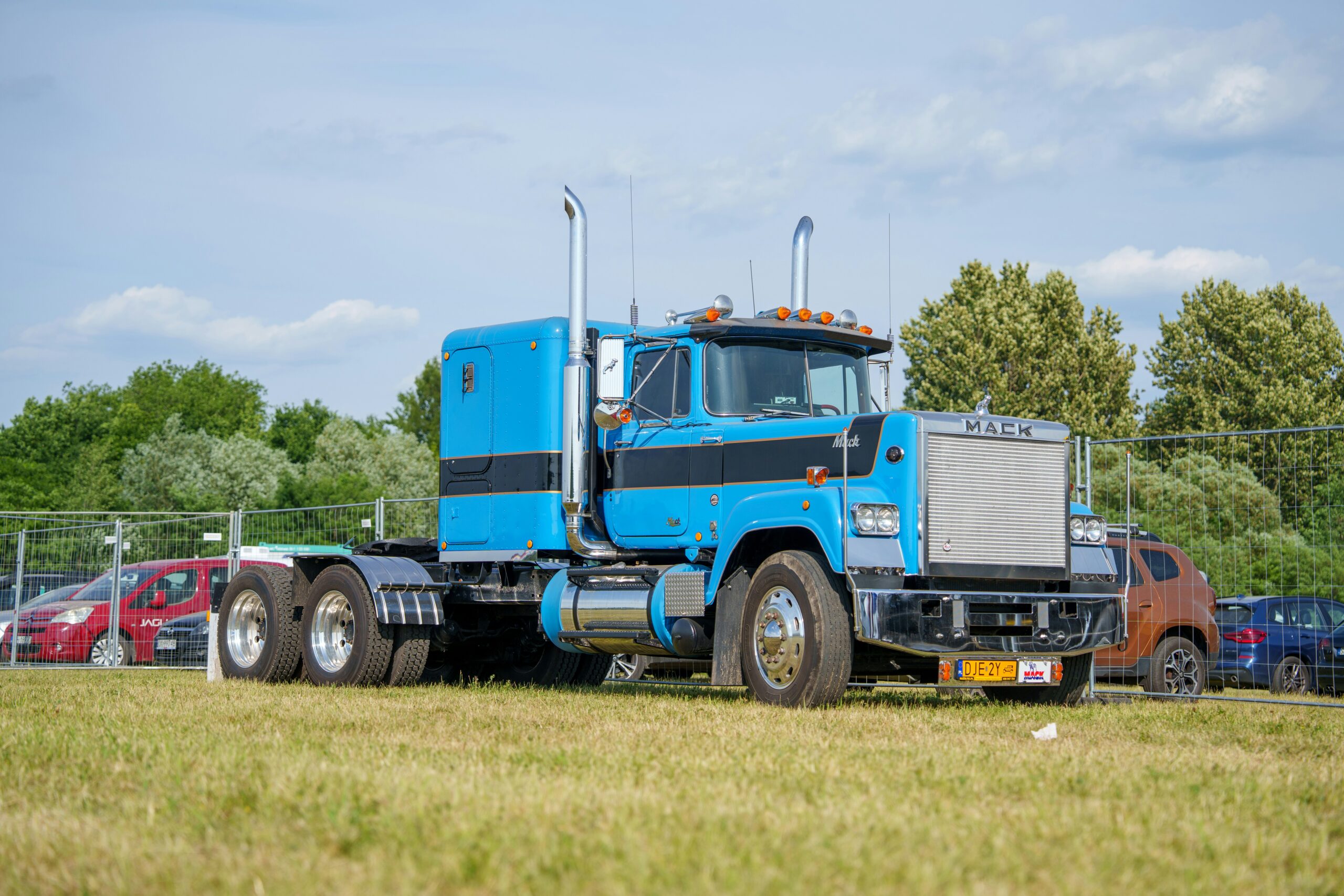
Learning how to get trucking authority is the step that separates an owner operator from a company driver. Your own authority allows you to run under your own name, negotiate directly with brokers and shippers, and keep 100 percent of your freight revenue instead of splitting it with a carrier. This guide walks through every step required to get your MC number, DOT number, and operating authority in 2026 so you know exactly what to do and in what order.
What Is Trucking Authority?
Trucking authority is the federal operating license issued by the FMCSA (Federal Motor Carrier Safety Administration) that legally allows you to transport freight across state lines for compensation. Without it you cannot legally haul loads as an independent carrier.
There are two core credentials you need: a USDOT number which identifies your business to federal regulators, and an MC number (Motor Carrier number) which is your actual operating authority for hire. Both are issued through the FMCSA and both are required before you can legally operate independently.
Who Needs Their Own Trucking Authority?
You need your own authority if you plan to haul freight for hire across state lines under your own name. This includes owner operators who want to work directly with brokers and shippers rather than leasing on with a carrier.
You do not need your own authority if you plan to lease on with an existing carrier. In that case you operate under the carrier’s authority and their DOT number covers your operation. The tradeoff is you earn less per load and have less control over your freight.
Getting your own authority makes sense when you have enough experience to find your own loads, enough capital to cover startup costs including insurance, and enough financial cushion to handle the gap between hauling loads and getting paid.
Step 1 — Register Your Business
Before applying for authority you need a legal business entity. Most owner operators form an LLC (Limited Liability Company) which separates your personal assets from your business liabilities.
Form your LLC through your state’s Secretary of State website. Filing fees vary by state but typically run $50 to $200. Once your LLC is registered obtain an EIN (Employer Identification Number) from the IRS at irs.gov — this is free and takes about 10 minutes online.
Open a dedicated business bank account using your LLC name and EIN. Keeping business and personal finances separate is essential for tax purposes and for building business credit over time.
Step 2 — Apply for Your USDOT Number
Your USDOT number is your federal identification number as a motor carrier. Apply through the FMCSA Unified Registration System at fmcsa.dot.gov. The application is free and straightforward — you will provide your business information, operating type, and vehicle details.
Your USDOT number is issued immediately upon application. However it goes into an active status after you complete the full registration process including your MC number application and insurance filings.
Step 3 — Apply for Your MC Number
Your MC number is your actual operating authority — the license that allows you to haul freight for hire. Apply through the same FMCSA Unified Registration System immediately after your USDOT application.
The filing fee for an MC number is $300 one-time. After payment FMCSA publishes your application in the Federal Register for a 10 day protest period during which existing carriers can object to your application. In practice protests are extremely rare for new single-truck operations.
After the protest period clears your MC number is issued and moves to pending status while you complete the remaining requirements.
Step 4 — File Your BOC-3
A BOC-3 (Blanket of Coverage) designates a process agent in every state you plan to operate in. A process agent is a legal representative who can receive court documents on your behalf in each state.
BOC-3 filing is handled by third party process agent companies — do not attempt to file this yourself. The cost is typically $40 to $75 and can be completed online in minutes. Search “BOC-3 process agent” and choose a reputable provider. Filing is usually same day.
Step 5 — Get Your Insurance Bound
This is the most time consuming and expensive part of getting your authority active. FMCSA requires proof of the following minimum insurance coverage before your authority goes active:
Primary auto liability: minimum $750,000 for general freight, $1,000,000 for most hazmat operations. Most brokers require $1,000,000 regardless of FMCSA minimums so plan for that level.
Cargo insurance: minimum $5,000 per vehicle but most brokers require $100,000 in cargo coverage.
Your insurance company files proof of coverage directly with FMCSA through a form called an MCS-90. Once FMCSA receives and processes that filing your authority moves to active status.
Getting insurance as a new authority is the hardest part of this process. Many carriers will not write new authority policies and those that do charge significantly higher premiums for the first year. Budget $600 to $1,200 per month for primary liability alone. Work with an independent broker who specializes in trucking insurance — they have access to markets that write new authority policies.
Step 6 — Complete UCR Registration
UCR stands for Unified Carrier Registration. It is an annual registration required for all interstate carriers and the fee funds state motor carrier safety programs.
Register at ucr.gov. The annual fee for a single-truck operation is $59 as of 2026. Registration opens each fall for the following calendar year. You cannot legally operate without a current UCR registration.
Step 7 — Get Your IFTA License and IRP Plates
IFTA (International Fuel Tax Agreement) simplifies fuel tax reporting across states. If you run in more than one state you are required to have an IFTA license and file quarterly fuel tax returns. Apply through your base state’s DMV or department of transportation. The license itself is typically $10 to $25 plus decals.
IRP (International Registration Plan) covers your apportioned license plates which allow you to operate legally in multiple states under a single plate. Apply through your base state — fees vary significantly by state and by the miles you project running in each state but typically run $1,500 to $2,500 per year for a single truck.
Step 8 — Complete Your Drug and Alcohol Consortium Enrollment
All owner operators with their own authority are required to participate in a DOT-compliant drug and alcohol testing program. You cannot operate legally without it.
Enroll in a third party consortium — these are companies that manage the testing pool and ensure you are in compliance with FMCSA random testing requirements. Cost is typically $100 to $300 per year plus the cost of any required tests. You will also need a pre-employment drug test before you haul your first load.
How Long Does It Take to Get Trucking Authority?
The full process from application to active authority takes 4 to 8 weeks in most cases. The timeline breaks down roughly like this:
USDOT and MC number application: immediate upon filing. Protest period: 10 business days after MC application. Insurance filing and processing: 5 to 15 business days after your insurer files. BOC-3: same day to 3 business days.
The bottleneck is almost always insurance. Finding a carrier willing to write new authority and completing the MCS-90 filing takes the most time. Start the insurance process as early as possible — ideally at the same time you file your MC application.
What Does It Cost to Get Trucking Authority?
Here is the full cost breakdown for getting your authority active:
| Expense | Cost |
|---|---|
| MC Number Application Fee | $300 |
| BOC-3 Process Agent | $40 – $75 |
| UCR Registration | $59 |
| IFTA License and Decals | $10 – $25 |
| IRP Apportioned Plates | $1,500 – $2,500 |
| Drug Consortium Enrollment | $100 – $300 |
| Insurance Down Payment + First Month | $2,000 – $4,000 |
| Total to Get Active | $4,000 – $7,000 |
Total does not include your truck or ongoing operating reserves. See the full startup cost breakdown in the How Much Does It Cost to Start as an Owner Operator guide.
Common Mistakes New Authority Operators Make
Starting before you have enough capital. Insurance and plates alone cost several thousand dollars before you haul a single load. Add operating reserves on top of that. Most operators who fail in year one ran out of cash, not out of loads.
Not understanding broker requirements. FMCSA minimums and broker requirements are different. Most brokers require 6 to 12 months of active authority before they will work with you, $1,000,000 in liability coverage, and a satisfactory safety rating. Plan for a slow ramp up period as you build your carrier profile.
Skipping the drug consortium. This is an FMCSA requirement, not optional. Operating without consortium enrollment exposes you to serious violations and potential loss of authority.
Underestimating insurance costs. New authority insurance is significantly more expensive than what established carriers pay. Budget conservatively and shop through a specialist broker.
Understanding how to get trucking authority is only the first step — executing it with enough capital and preparation is what determines whether your first year is profitable or a financial struggle.
Know Your Numbers Before You Go Independent
Owner-Operator Readiness Calculator — Get scored on your finances, experience, and business preparation before you make the leap.
Cost Per Mile Calculator — Know exactly what it costs to run your truck per mile so every load you accept is profitable.
Load Profitability Calculator — See the real net profit on any load after fuel, deadhead, and costs before you say yes.
Fuel Cost Calculator — Calculate your exact diesel cost for any trip with live EIA regional prices.
Disclaimer: Requirements, fees, and timelines for obtaining trucking authority are subject to change. Always verify current requirements directly with the FMCSA at fmcsa.dot.gov before beginning the process. This post is for informational purposes only and does not constitute legal or professional advice.